- At the end of 2024, the Center for Climate and Resilience Research (CR2) and the Climate Action Center of the Pontificia Universidad Católica de Valparaíso (PUCV) signed an agreement that will enable them to collaborate on education and capacity-building initiatives for environmental protection, as well as the development and implementation of research projects, public engagement, and public policy related to the environment, biodiversity, conservation, and other areas.
- Currently, work is being carried out in central Chile. However, this inter-center collaboration aims to respond to diverse realities and themes of climate action and resilience throughout the country.

“A collaboration agreement between CR2 and the Climate Action Center of PUCV is essential to strengthen research and climate change-related actions in Chile,” states the document formalizing the collaborative work of both scientific entities. Thanks to this alliance, researchers from both institutions will be able to enhance public outreach on various environmental topics and provide reference materials where appropriate, says Priscilla Berríos, Executive Director of the Climate Action Center at PUCV.
“The intention of both parties in signing this agreement is to establish long-term cooperation in various areas, such as research, public policy analysis, projects, and public tenders, among others. Our first milestone has been the joint application to the 2025 Research Ring Competition in Specific Thematic Areas, which evaluates and analyzes adaptive strategies to drought in agriculture in the context of climate change from an interdisciplinary perspective. This project is titled ‘Assessing Adaptive Strategies to Drought in Agriculture in the Context of Climate Change’, and its goal is to analyze current drought adaptation strategies in three strategic productive systems in Chile: avocados, wheat, and beekeeping,” explains Priscilla Berríos.
Climate Adaptation and Governance
On her part, Susana Bustos, Director of Management and Liaison at CR2, highlights that this is not the first time the two centers have collaborated.
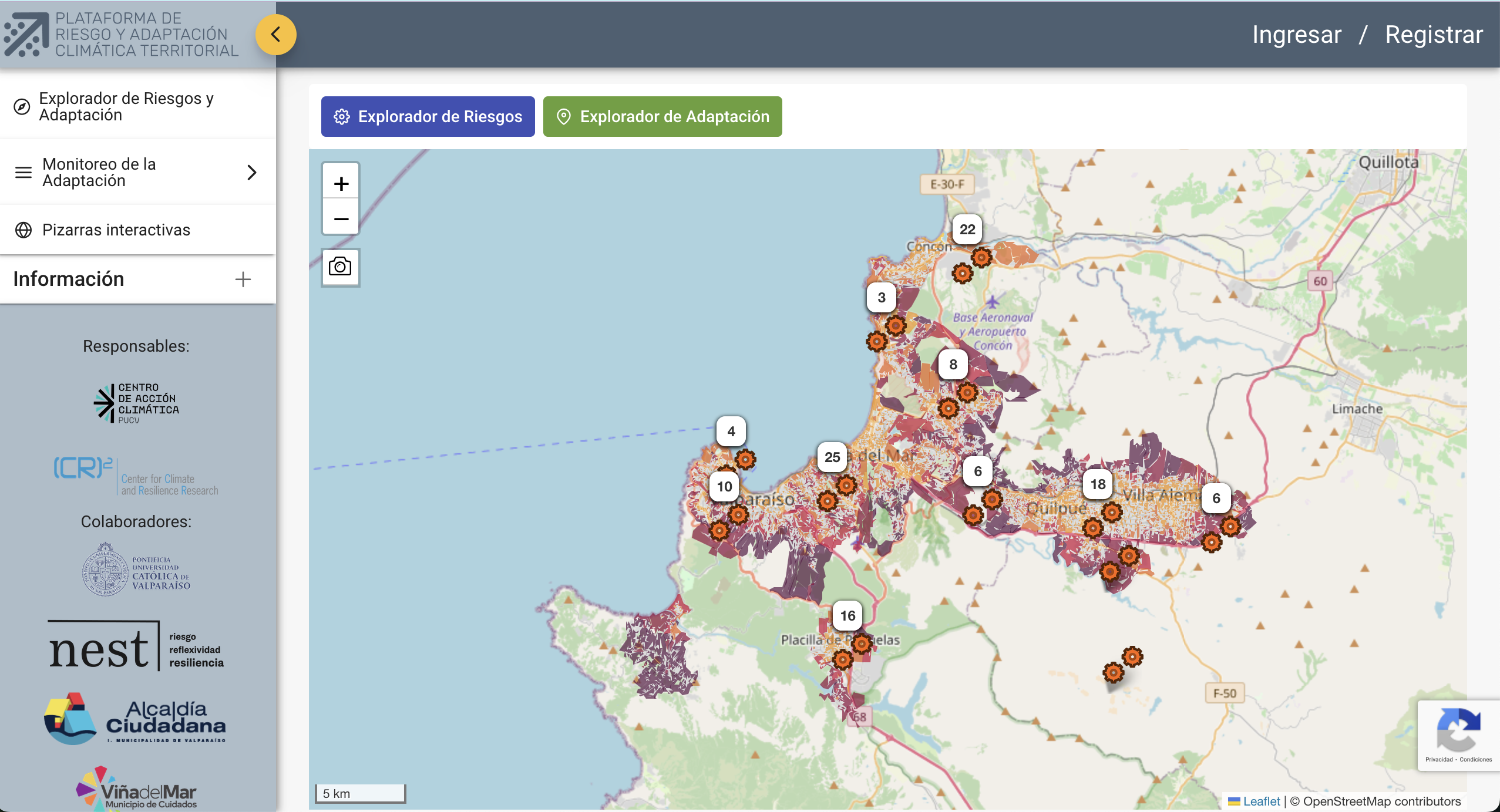
“Something important to note is the joint work carried out to provide information and tools for climate change adaptation. For example, high-resolution maps have been developed to assess population risk from climate change threats such as water insecurity, extreme heat, storm surges, flooding, wildfires, and landslides. Currently, the platform covers five municipalities in the Valparaíso Region, but efforts are ongoing to improve and expand it to other areas,” she explains.
Another initiative led by both centers is “Closing the Water Adaptation Gap,” also known as “Red por el Agua” (Water Network), which promotes participatory governance in the Aconcagua River Basin.
Commitment to Climate Change
“Both CR2 and CAC have highly qualified professionals and multidisciplinary teams focused on shared goals related to the environment and climate change. This experience has fostered significant synergies between the two institutions, strengthening our joint understanding of complex climate issues and enabling collaborative work that bridges science and action. Moreover, the two institutions complement each other “CAC is regionally based in an area highly vulnerable to climate change: the Valparaíso Region,” adds Priscilla Berríos, Executive Director of the Climate Action Center at PUCV.
The Climate Action Center at PUCV is an applied research center focused on enhancing preparedness in the Valparaíso Region and throughout Chile in the face of the ongoing climate crisis. It promotes the development of proposals and solutions to strengthen climate resilience through collaboration with public and private entities.
Framework Law on Climate Change

“CR2 and the Climate Action Center at PUCV share multiple objectives and approaches in their work on climate change in Chile. This is why we are deeply committed to maintaining and formalizing this collaboration. Both centers are strongly dedicated to climate resilience, and we firmly believe that current challenges must be addressed from an interdisciplinary perspective. We strive to contribute to public policy development, capacity-building, and promote collaborative work among various institutions,” states Susana Bustos, Director of Management and Liaison at CR2.
In fact, on May 30 at 9:00 AM, a seminar will be held —organized by CAC and the Chilean Association of Municipalities— titled: “Three Years Since the Enactment of the Framework Law on Climate Change: Opportunities and Challenges for Territorial Climate Action through Capacity-Building, Funding, and Transfer of Competencies to Local Governments,” at the Engineering Faculty Auditorium of PUCV (Avenida Brasil 2162, Valparaíso).
As part of the event, CR2 researcher Marco Billi will present the main findings and conclusions from his field of work on climate adaptation, vulnerability, and local climate risk, particularly regarding capacity-building for climate action.